Thursday, February 9, 2017

Keys


An errant son of a famous father drifted into a lifestyle of money and marijuana. Mehmood was one of the most prolific comedian/actor, director and producer in Bollywood in 60s and 70s. Maqsood's relationship with his father was far from smooth, but somehow didn't make it to tabloids. His initial acting forays as a child actor in 60s and then a few off-beat films in 70s were limited success. At some point he moved to Australia & New Zealand.

In mid-90s, Maqsood Mahmood Ali released an album. Titled Sunoh (Listen), it featured beautiful lyrics, easy to hum along songs, sung with a slight nasal voice. The album featured a song 'O Sanam' that stayed in MTV Asia's music charts Top 3 for 60 weeks, and won him Channel V Viewer's choice awards. With a neat Egypt themed video, it received plenty of screen time on Music as well as regular Indian television. Lucky Ali became an instantly recognizable name.

The video starts off with Lucky Ali, an archaeologist, travelling to a dusty desert place on a motorcycle with a side car. Apparently he is the rebirth of an ancient feudal lord. This turns out to be coincidentally the same place of his previous life. The key (literally) to his memories is this large key, a key to a prison cell. He remembers the painful events of his past life.

In his previous life Lucky Ali arrested the older person related to the lady in veil and convicted of some crime. This enigmatic lady, all we can see are her beautiful eyes, is played by Lucky Ali's then wife Meaghan Jane McCleary. Veiled lady is determined to free the man, played a false love affair with the feudal lord. This is about 2:30 minutes into the song where she, and a bunch of other veiled ladies, steal the key from a sleeping feudal lord. She eventually succeeded in freeing man, but herself got caught. The feudal lord really fancies the girl, but what she has done can't go unpunished. She convicted to be beheaded. The love remains unfulfilled.
In this life, Lucky Ali as an archaeologist feels sad for his previous life and sings the song in remembrance. At last he throws the key away in despair.

The first time I heard this song, I was hooked. The simplicity of the song, the ease with which it could be hummed or sung along appealed to me instantly. The slight nasal twang didn't really bother me. The video was superb, a well made short story in a 4 minute song. The mellifluous Urdu words (some of which I had to look up for their meaning) were easy to sing. The entire album had great songs, and the songs just wove into one another into an entire album of rustic melodies.

Listen to an unplugged version on soundcloud but better still, watch the wonderful video

Sunday, January 22, 2017

Freedom

"Where the mind is without fear and the head is held high"
Few words could describe the incredible Women's peace march that took place in DC with simultaneous marches all over the world. Over 3 million women, and supporters took to the streets peacefully awakening the world to the sorry state of health issues (particularly ones that deny women rights over their own bodies in the name of religion) and environmental issues.

With this backdrop, Rangeen Sapne presents the next song. The very first song in the first episode of the show 'The Dewarists'. In 90s, when Indian rock scene was still nascent, Pentagram was a solid rock band. Vishal Dadlani, one of the founders of this band, was the vocalist. Since then, he moved on to Bollywood film soundtracks collaborating with Shekhar Ravjiani to form the popular Vishal-Shekhar duo. Vishal Dadlani continues to innovate and collaborate with diverse set of artistes.

Imogen Heap has trained in classical instruments such as clarinet, cello and piano. Adding to a wind, a string and a keyboard, she learnt to play guitar and drums, and also experiments with Hang drum. Electronic music is what she is best known for, and she uses ambient sounds within her music.

The song begins with Vishal Dadlani and Imogen Heap with a street band on the streets in Rajasthan. Initially, Vishal provides the chorus and the back vocals, it's really Imogen who sings the first stanza. Blending English and Hindi fairly well, she leads into the 2nd stanza which is a duet.

2:10 minutes into the song, the chorus sings 'Ji ji re, ji ji re ji", a backdrop popular in Marathi 'Povada', very well blended into the rest of the song. The short (~3 minute) song ends with ".. and the story continues.. Mind Without Fears".

The video itself is a free form, walking light steps, almost dancing in the streets. Imogen ends the song with a whirling dervish form symbolizing the freedom where the conscious mind is completely in tune with the body and the rhythm of the music and the unconscious mind tuned to the whirling dance.

Watch the song on youtube and the original poem that inspired this song is reproduced here


Where The Mind Is Without Fear - Rabindranath Tagore

Where the mind is without fear and the head is held high Where knowledge is free
Where the world has not been broken up into fragments
By narrow domestic walls
Where words come out from the depth of truth
Where tireless striving stretches its arms towards perfection
Where the clear stream of reason has not lost its way
Into the dreary desert sand of dead habit
Where the mind is led forward by thee
Into ever-widening thought and action
Into that heaven of freedom, my Father, let my country awake.


Tuesday, January 3, 2017

Paree

The year was '93. I had just entered 'junior college' and was suddenly exposed to a world of intercollegiate competitions, rose-days, Tie and Saree days and annual days. And competitive fashion shows, those choreographed, somewhat elaborate dances paraded by budding youth on the college ramps. Each of the fashion show competitions would typically involve three or so different themes, one of which would be Ethnic couture.

It is with this backdrop that I remember a song, a singularly popular song with a haunting melodies singer and a somewhat unusual beat that I forever associate with the fashion shows of my youth.

Leslie Lewis had moved up from composing radio jingles to occasional score in movies. A song or two here and there, collaborating with other bigger names. A young Suneeta Rao, who had established herself in the college scene in St Xaviers productions of plays such as Evita was signed up by HMV for an album Dhuan. Translated  literally, it means smoke, but one that was meant to be the smoke screen between reality and dreams.

First half of the song is shot almost entirely in black and white, the song shows interwoven snippets of Suneeta Rao, and a young girl. The story or the plot of the video, I must confess, I never truly understood. It seems to revolve around a girl coming of age, transitioning from a girl to a young lady, but overall, the theme is subdued, and most of the video is really focused on a pretty Suneeta Rao.

Paree translates literally into a fairy, but a more apt translation here would be an angel or nymph. The song is about this nymph, the pretty girl lost in a dream sequence.

The song is a sensual, fast paced song. The beat is simple, the meter is somewhat long. The cymbals based percussion perhaps is a signature of this song. The riffs towards the end are similar to what Euphoria later used in Maaeri.

The song is short, the melody and the flute is haunting, sensual and almost transcendental. The beats themselves lend to a slow and steady rhythm, what made it such a hit on the ethnic fashion show sequences.

Watch Paree Hoon mein on YouTube (pretty bad clip but the only video I found) or on soundcloud

A good song can inspire covers, some quite wonderfully rendered. Watch an interesting cover of this song played by four girls from earlier this year. Sung very well, but with a video that starts cute but then progresses to ridiculously cheesy visuals.


Sunday, December 11, 2016

Chudiyaan


Every once in a while comes a crooner, one who sings lilting melodies with flat notes that tug your heart string. With powerful timber to the voice and a great combination of keyboard, guitar and drums. Then this band finds the right story, one that lends itself to such emotional voice, and then finds lyrics that fit the theme spot on. Then they find a theme, an object, one that may otherwise be just something random, but they make it symbolize the entire story.
Before I talk about the let me introduce, Kaash. A Delhi based band, Viren and Shivam are credited with lyrics and also produced the music videos. That voice is Viren's, who caresses the microphone that reminds me of Axel Rose. Shivam at keyboards, Nishant Parashar and Sonic Shori on the lead and bass with Nirvan Parvera on the drums. The comparison with Axel goes on, the music video has a 'theme' interspersed with shots of the band in a desert. The song itself  is a romantic ballad, pictured on a young couple in love, their moments of tenderness and silliness, and a breakup. If your mind flashes back to 'Estranged', I am not sure that connection to Guns n Roses is just coincidental.

Main Laut Aaugna starts with a girl stuffing clothes in a suitcase to leave. As she slams the door, a picture of the two of them together falls and cracks. The song then turns to glimpses of a happy relationship, silliness of a newly married couple, with an emphasis on bangles, the pride and love with which the guy puts them on a girl's wrist. The relationship turns  sour when the guy makes a drunk pass at someone and when his (wife?) tries to hold him back, he breaks the glass bangles, and so does the relationship. As he sings 'mein laut aaunga', he goes back to get her, he takes a box of bangles to win her back. Symbolizing the chudiyaan for their love, the video makes it a theme, a center piece to the story of this young love. The attractiveness of glass bangles contrasts with their fragility, in a way that suggests that love, attractive as it may be as it adorns a young couple, can be equally fragile and delicate, and when it breaks, it hurts.

The music video has a few interesting easter eggs, at 0:28 the phone shows 'Shivam Khare' as one of the contacts, not sure if that's a hint at  credits. Another interesting shot at 1:30 into the song is when Nirvan has something in his hand that he tosses aside just in time as if someone cued him it was time to start playing the drums and he had been distracted elsewhere.

Kaash defines Hindi Rock by distilling the purest emotions an Indian soul showcasing it with luminous production quality and stunning songs.

Watch the video or listen and check them on social media

Sunday, December 4, 2016

Hindi rap

The year was '92, and a funny looking Jat wearing a Michael Jackson hat and earrings with a flashy red jacket and a red tie looked every bit as clichéd as you think. What he also brought was a booming voice, one that had a good range especially a good  solid baritone. A good timber for a singing voice, Baba Sehgal however rushed in the era of rap into Hindi music.

Albeit low-budget and limited-success with earlier albums, the year '92 favored Baba. His funny parody Thanda Thanda Pani, originally Vanilla Ice's Ice Ice Baby became  a hit. The biggest hit however, is undoubtedly, Dil Dhadke.

Starting out like a cheesy 80s music video, the single features the ravishing Pooja Bedi as a 'dream girl'. A bare-chested Baba standing in front of a bright red table fan is a cool throw-back to that era of music videos. Incidentally, the random girls, Baba and Pooja Bedi are never in the same frame together, which makes me wonder if they never even met, each of scenes were shot separately and then put together: not unusual, just sounds like a struggling artiste who gets his first break and has the ability to put together a music video. The overall video,  and the song itself, became a hit!

The lyrics and the meter became his signature, 'mein to jaoonga, pakdunga, chedunga, gaoonga, bolegi woh na-na-na-na-na hey na-na-na-na-na' .. using the natural rhyme of the words in the language but at times, surprisingly difficult to roll off our tongues. Baba also portrays himself as a innocent and aspirational, dependent on someone else to protect him and make him successful  'mujhe god hi bachhae, ache ache logon se hi mera parichay karay'.

The timing was a part of this success. MTV had only just launched in India, in collaboration with the state-run Doordarshan. This music video became the first Indian music video to be aired on MTV India. It received a lot of screen-time, especially as requests poured in as MTV made inroads to masses that typically weren't too keen on English music.

Watch Baba Sehgal in Dil Dhadke

Monday, November 28, 2016

An aramaic hymn

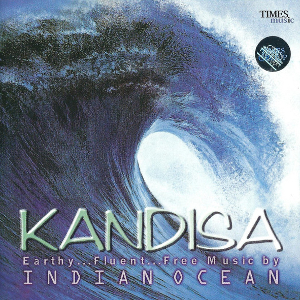
Four artistes heard an ancient hymn while visiting a priest. A Syrian orthodox priest in Kerala singing a song in Aramaic, a language that had has disappeared for generations, with some hymns remaining in parts of the world far from their origin in Syria.

The work rendered became a mesmerizing short song with beautiful melody, with classical guitar riffs that became a signature of the band. The first big break for this band produced at a world class studio with a 'profession...al' producer, the song defined the band, and became one of the top Indian rock songs ever.

It begins with Rahul's vocals, a couplet, quickly followed by Sushmit's melodies. Asheem provided the vocals but he, along with Amit on drums mostly stayed away from taking the spotlight away from the guitar which provides the rhythm too, not just the melody.

Introducing Indian Ocean with their first major hit, Kandisa
https://soundcloud.com/indian-ocean-music/kandisa

No real video was ever made for this song.
https://www.youtube.com/watch?v=BPzTsQI8SZA